Notes from the atelier
Caring for full-grain leather in a hot, humid climate
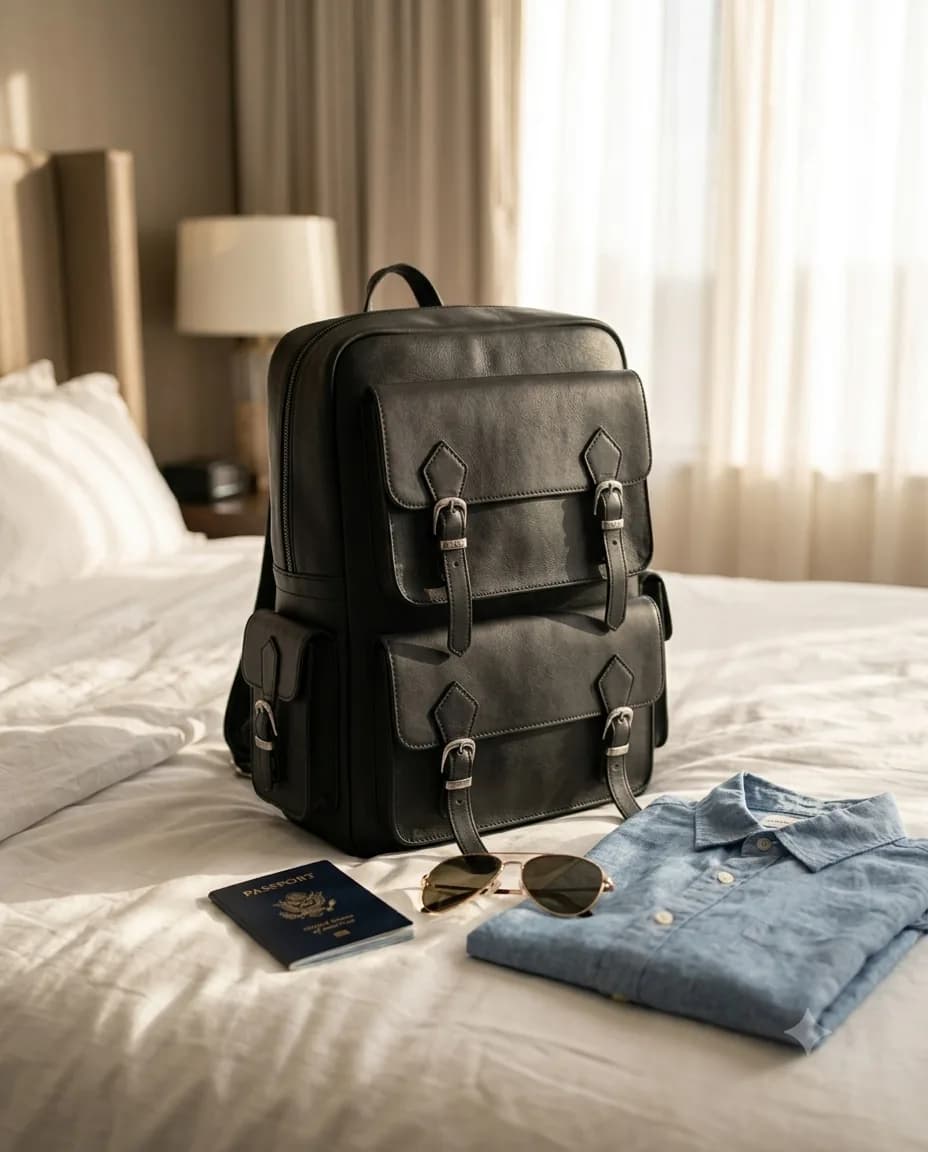
Full-grain leather copes well with the climate, provided it is looked after. Our pieces are made in Dakar, in heat and humidity, and they are designed to live there. But living well asks for a few habits — few, and regular. The advice below, given as a guide, applies to our smooth full-grain leathers; an exotic skin or a different finish calls for different care, ask the atelier.
What the climate does to leather
- White marks may have different causes. Avoid treating them before identifying the cause; seek advice with details of the material and finish.
- Heat dries. Leather left in a car in the sun can lose its oils and crack at the folds.
- Dust is abrasive. It settles in the grain and, rubbed by use, polishes the leather where it should not shine.
- Sea air salt speeds up all of the above.
The habits
Dust it. A soft, dry cloth, once a week if the piece goes out every day. This is the habit that matters most, because it keeps the others from being needed.
Before applying a care product, check compatibility with the finish and follow its manufacturer’s instructions. Test on a hidden area. Frequency depends on use and the condition of the leather.
Dry it without forcing. Wet leather is left to air-dry, away from any heat source, keeping its shape — a bag is filled with paper, not newspaper whose ink bleeds.
Store it breathing. Avoid plastic: leather sealed in humidity can grow mould. A cotton bag, in the shade, in a room that breathes.
What not to do
- No household products, no wipes, no alcohol. They can damage the finish.
- No coloured polish on leather that has never had any: it can mask the grain and is hard to remove.
- No hairdryer, no direct sun to dry.
Our leather, a second skin.
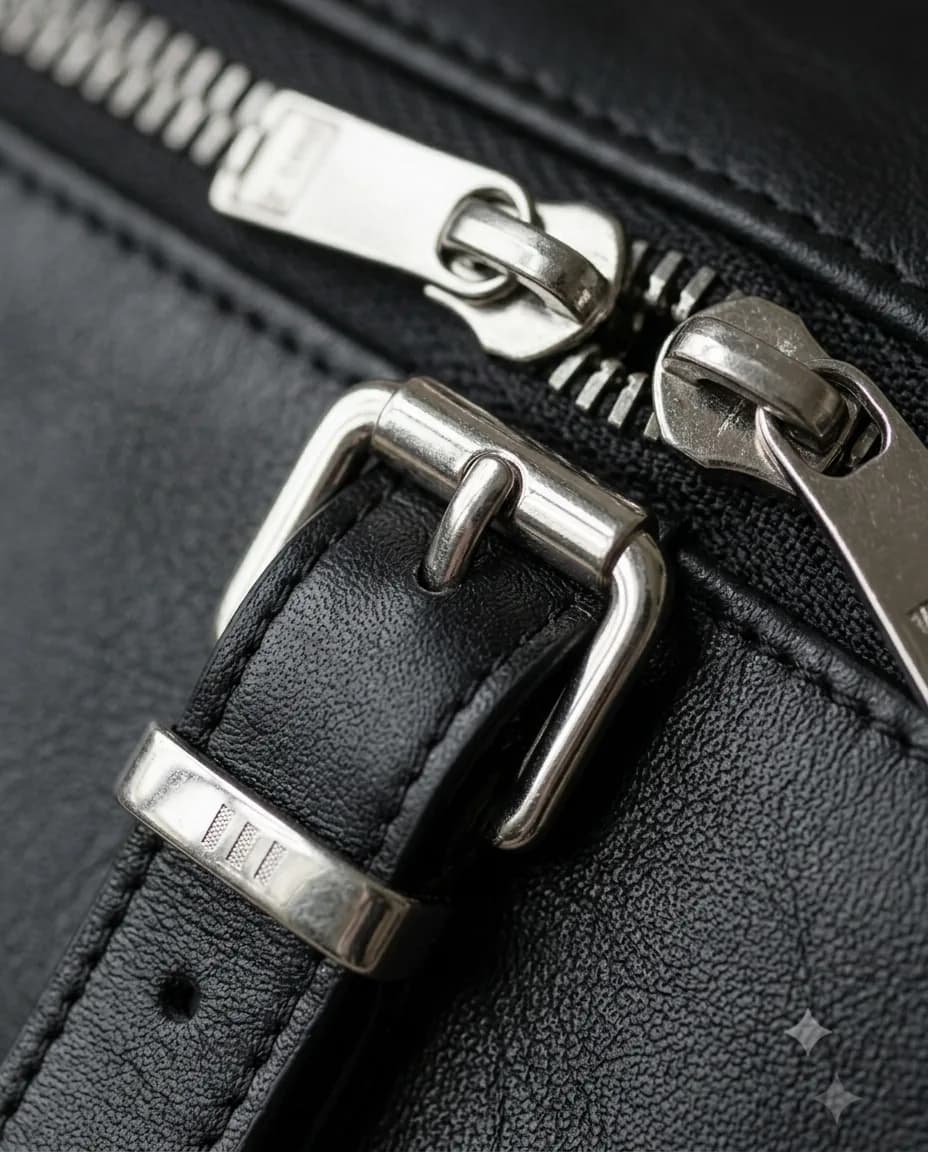
And if a piece has suffered — a deep scratch, a stitch coming loose, a buckle weakening — bring it back to the atelier, or write to us. Depending on the case, a piece can be repaired; the atelier will tell you what is possible. That is the difference between a piece you own and a piece you replace.